Ethel Smyth, music and civil rights battles - Orchestra Sinfonica di Milano

Ethel Smyth, music and civil rights battles: a voice out of the ordinary

Published on 02/03/2026

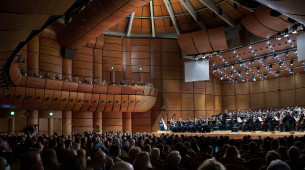
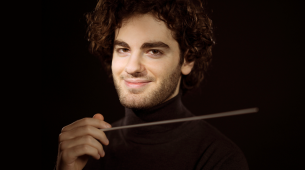
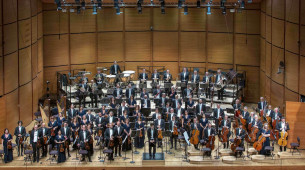
March 20 and 22 Anna Rakitina makes her debut on the podium of the Orchestra Sinfonica di Milano with a program dedicated to 19th and 20th century English music, featuring music by Edward Elgar, William Walton, and Ethel Smyth, with her Concerto for Violin, Horn, and Orchestra, featuring soloists Nikolaj Freiherr von Dellingshausen and Giuseppe Amatulli, the Symphony's principal players.

A little-known composer, Ethel Smyth is a fascinated character and representative of her era. It reminds us how for women throughout the ages freedom and emancipation was never a small thing and a given.

Composer, conductor, writer, activist.
The figure of Ethel Smyth (1858 – 1944) – born in London on 22 April 1858 – crosses European musical history between the nineteenth and twentieth centuries as an energetic and counter-current presence. At a time when the professional world of music was dominated by men, Smyth didn't just ask for space: he won it over, often at the cost of hostility, prejudice, and marginalization.
Born into an upper-middle-class English military family, she had to fight against her father's opposition to study music professionally. In 1877 he enrolled at the Leipzig Conservatory, coming into contact with the German musical environment and with figures such as Brahms and Clara Schumann. Germany was long his “spiritual homeland”, and his continental education helped make him an atypical figure in the British landscape.
Her London debut in 1890, with the Serenade and the overture to Antony and Cleopatra, surprised critics: many reviewers declared themselves astonished that behind those vigorous and confident orchestral pages there was a woman. Her Mass in D (1893) established a reputation as a composer capable of handling large ensembles and large structures, with powerful and technically sound choral writing.
But Smyth's ambition was above all musical theatre. His six works —including Der Wald, The Wreckers and The Boatswain's Mate— reveal an intense dramatic personality, capable of combining narrative tension and orchestral richness. The Wreckers (1906), set in a Cornish village where the community causes shipwrecks to loot ships, is perhaps his masterpiece: a work of strong emotional impact, hailed at the time as one of the most important in contemporary musical theatre.
Alongside his artistic career, Smyth developed a growing political awareness. In 1910 he met Emmeline Pankhurst and enthusiastically joined the British suffragist movement. Her most famous page in this field is The March of the Women, which has become the anthem of the suffragettes. Arrested for her militant activities, she directed her fellow prisoners from the courtyard of Holloway Prison, beating time with a toothbrush: an image that has become a symbol of her determination.
His music, however, is never a simple ideological manifesto. It is music of strong thematic inventiveness, rhythmic momentum, brilliant orchestral colors. An example of this is the Concerto for Violin, Horn and Orchestra of 1927, composed at a mature stage of its production. Here the energy and melodic imagination typical of Smyth intertwine with a more measured language, almost classical in the clarity of the lines.

The dialogue between violin and horn — two instruments of different character, lyrical and pastoral one, noble and resonant the other — creates a dynamic balance, made of comparison and complicity. It is a virtuosic writing but never exhibited for pure effect: what emerges is the solidity of the architecture and the ability to make the orchestra sing naturally.
In 1922 Smyth was made a Dame of the British Empire, the first official recognition of a stubbornly constructed course. In the following years, as progressive hearing loss forced her to reduce her compositional activity, she devoted herself to writing memoirs and essays, revealing a brilliant, ironic and combative style.

The story of Ethel Smyth, on the occasion of International Women's Day, reminds us of the journey of an extraordinary figure: a pioneer of civil rights, but also an author of European stature, a protagonist of the British musical Renaissance, which saw the birth of important musical personalities such as Edward Elgar and Benjamin Britten. His personal story —of talent, passionate relationships, public battles and belated recognition — certainly reflects the contradictions of his time, however.

Valentina Trovato

Vuoi restare aggiornato sulle nostre attività?
Iscriviti alla newsletter!

@ sinfonicami

With the contribution of

MiC Logo

Institutional Founders

Logo Lombardia Logo Comune Milano


Founders Promoters

Logo Città Metropolitana Logo Camera di Commercio Logo Banco BPM Logo Pirelli Intesa Sanpaolo Logo

With the support of

Fondazione Cariplo Logo

Partner

A2A Forestami

Technical sponsors

Bigi Cravatte Milano Landor

Media Partner

Rai Cultura Radio 3 Corriere della Sera Logo Classic Voice

Digital Partner

Music Paper
How to contact us
Ticket office: Largo Gustav Mahler, Milan
La biglietteria è aperta da martedì a domenica, dalle 12.00 alle 19.00
T. 02 83389.401
[email protected]
Auditorium of Milan
Largo Mahler
Milan
M.A.C.
Piazza Tito Lucrezio Caro 1
Milan
© Fondazione Orchestra Sinfonica e Coro Sinfonico di Milano Giuseppe Verdi
Piazza Tito Lucrezio Caro, 1 - Milan
Tax Code 97119590152 - VAT number 11024950153