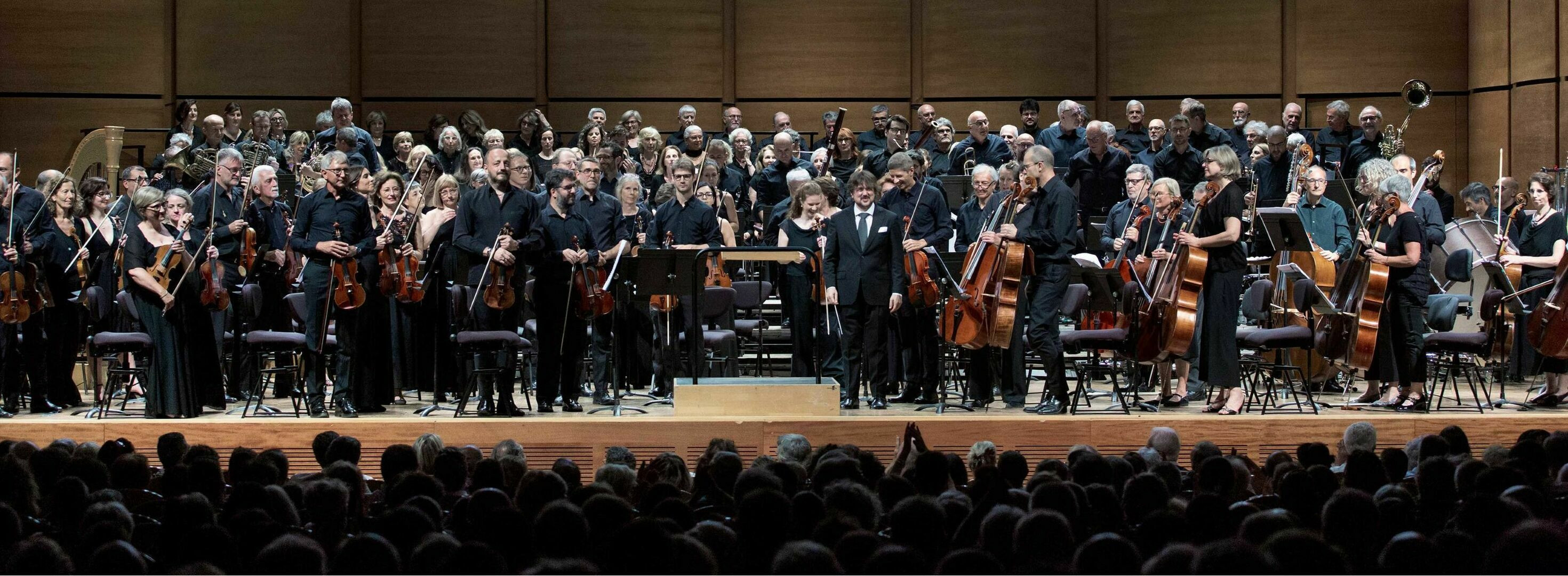
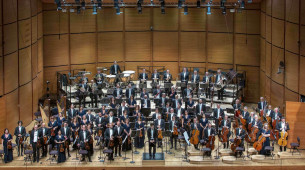
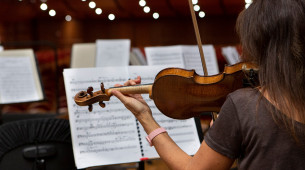
The word “amateur” is rooted in an ancient and noble tradition: that of individuals who cultivate an art form out of pure love, without ulterior motives. As early as the 17th and 18th centuries—particularly in Europe—groups of non-professional musicians would gather to make music together, often in private settings. By definition, an amateur is “someone who loves without asking for anything in return”—a figure that is once again central to understanding the identity of the *Orchestra Amatoriale* (Amateur Orchestra) of the Sinfonica di Milano, an ensemble that has fully embodied this spirit for twenty years.
The project originated during the 2005/06 season, conceived by Luigi Corbani and Matthieu Mantanus with the aim of creating a space where non-professional musicians could access the great symphonic repertoire. “People spoke of it as a sort of legend,” recalls Luca Santaniello—concertmaster of the Sinfonica di Milano’s first violins and string tutor for the Amateur Orchestra—“an orchestra made up of people who came to play out of pure passion.” From the very beginning, the Amateur Orchestra has stood out as a unique entity on the Italian musical landscape, capable of combining artistic rigor with an inclusive approach, thereby offering many musicians the chance to play a leading role in an experience that would otherwise be inaccessible to them.
As Ambra Redaelli, President of the Foundation, recalls,
“
Celebrating the twentieth anniversary of the Amateur Orchestra means celebrating the very soul of our Foundation.
I feel immense pride in the musicians, tutors, and the Conductor who courageously take on high-level musical challenges, transforming study into magic. These have been years of growth that I have experienced with enthusiasm from day one, attending the many concerts they have shared with us; their enthusiasm is our most precious source of energy. We will continue to support this extraordinary human and musical endeavor with undiminished passion.
”
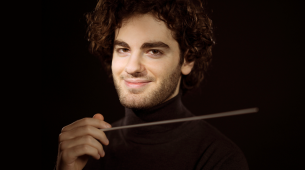
Over the years, numerous conductors have helped shape the orchestra’s musical identity, each bringing a distinct vision and enriching its shared journey. After Mantanus prepared the orchestra during its early years, the baton passed to Jader Bignamini—at the start of a dazzling career that would take him to the world’s most prestigious stages and eventually to the Detroit Symphony Orchestra—as well as to Giovanni Marziliano (principal cellist of the Symphony Orchestra) and, since 2016, to Andrea Oddone.
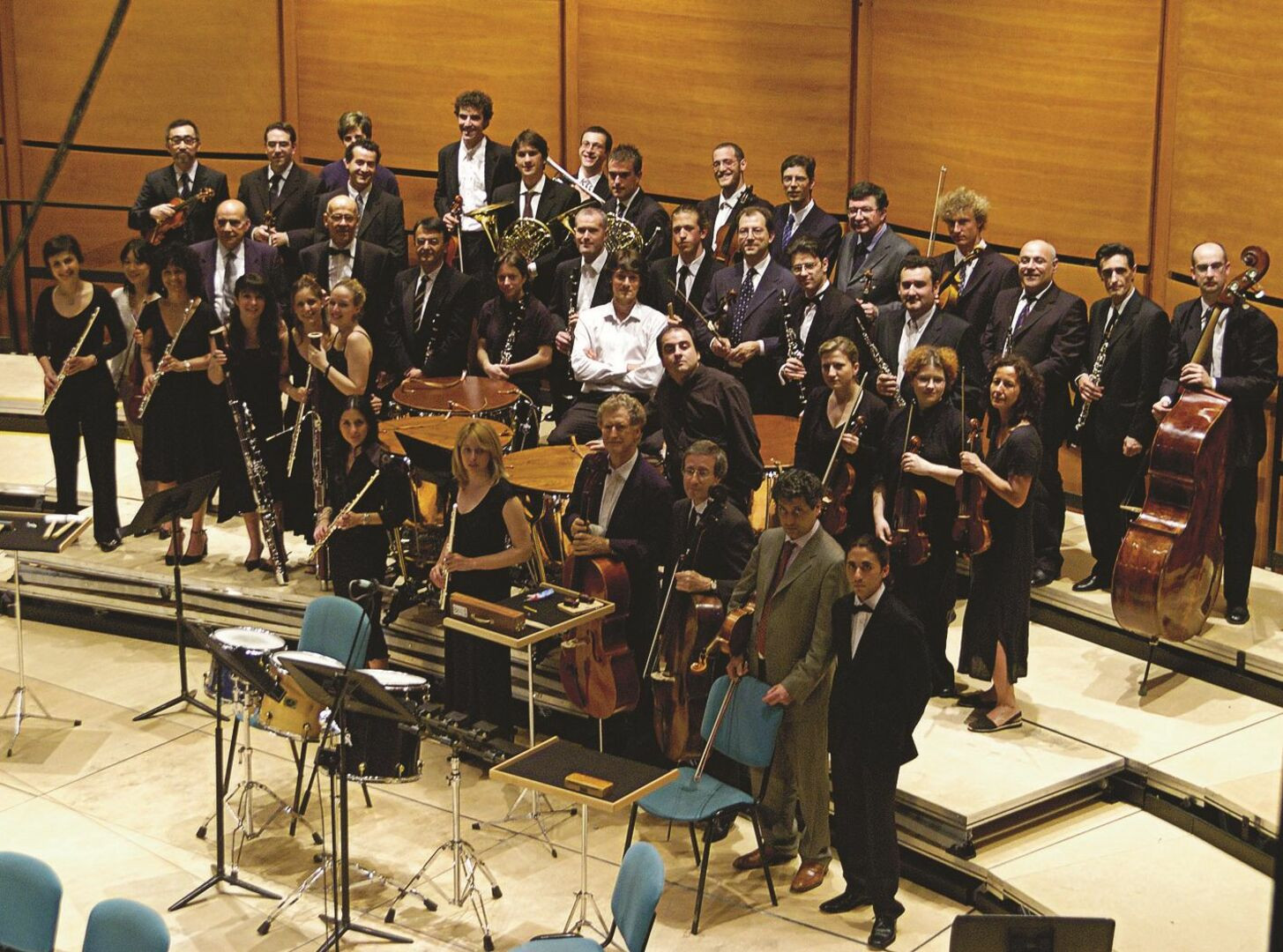
The Amateur Orchestra in its early days
.jpg&jwt=eyJhbGciOiJIUzI1NiIsInR5cCI6IkpXVCJ9.W10.M2Nsg35BOL1WTyL7r-QYaK3oeWk64oZYHs7Y0fb1C3k)
Jader Bignamini conducts the Amatoriale in Verona in 2012
"What emerges from this relationship is, above all, a massive injection of energy," says Oddone—now a key figure in the group—"fueled by these musicians' passion for the great symphonic repertoire. It is work that nourishes both heart and soul, because it places the love of music—and of what we do—back at the center."
One of the most distinctive features of the amateur ensemble is its deep connection with the Orchestra Sinfonica di Milano. Tutors and principal players from the professional orchestra work alongside the amateur members, creating an environment where expertise and enthusiasm feed off one another. "For us professionals, music is a job, with all the complexities that entails," the Orchestra Sinfonica di Milano musicians tell me, "but they are amateurs in the purest sense: they love music. And they form deep bonds with the people who help them nurture that passion."
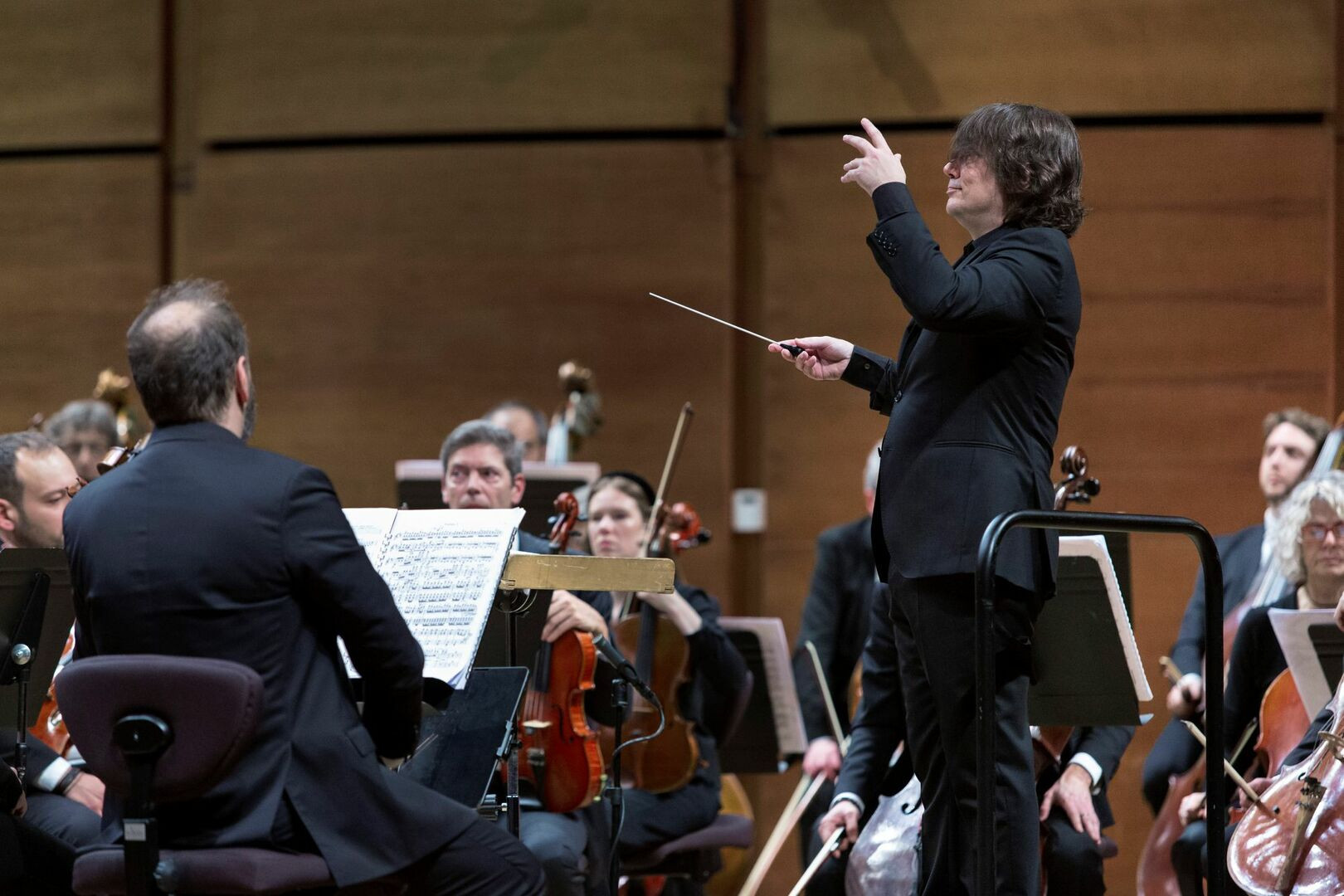
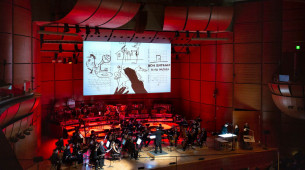
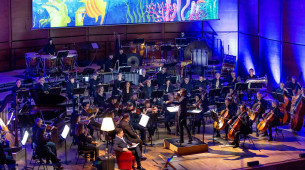
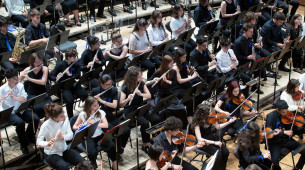
Andrea Oddone conducts the Amatoriale in *Rapsodie* – photo by Angelica Concari
This is a recurring theme in conversations with Alessandro Santaniello and Francesca Fagioli (from the Amatoriale’s cello and violin sections), Alessandro Ruggeri (clarinetist with Orchestra Sinfonica di Milano), and Laura Riccardi (principal first violin during Orchestra Sinfonica di Milano’s early years and a tutor for the Amatoriale at its inception). It is precisely this exchange that makes the Amatoriale a unique human and musical laboratory—a place where one learns not only to play better but also to experience music authentically.
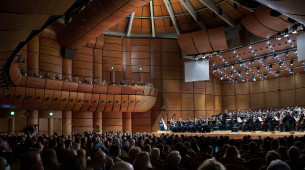
The Amatoriale also proves to be a space of freedom. As Luca Tregattini reminds me: "Every Tuesday evening from around 8 to 11 PM—come what may—we meet here in the auditorium. We start with sectional rehearsals: the strings with our section leader Santaniello, the bass lines with Franco Ramolini, and the winds with Alessandro Ruggeri; then, we put it all together with Andrea Oddone. Birthdays or Champions League matches don't stand a chance... we have a standing appointment."
Mario Shirai Grigolato, principal cellist of Orchestra Sinfonica di Milano, tells me about his early days as a tutor for the Amatoriale: "I joined the Amatoriale a couple of years after it started, and I remember the first rehearsal vividly. I gathered my courage and asked if anyone was absent. They told me, 'Just two people.' I replied, 'In my section during Symphony rehearsals, on the other hand, everyone is always present.' I also remember rehearsals with seventeen cellos—an image that has stayed with me."
photo by Angelica Concari
The true story of the orchestra is written in shared moments, both on and off stage. "For me, the Amatoriale has always been a family," says Remo Ghirardi, a lawyer and violinist who has been with the group almost since the beginning. "I joined at the time of the second concert, and I’ve experienced practically every season since then." Memories intertwine music with everyday life.
There have been deeply moving moments, too—times when music became a means of connection and comfort. "I remember the concert at Bollate Prison with great emotion," recount Remo Ghirardi and Alessandro Santaniello. "An inmate, interviewed on the news, described it as a wonderful moment of escape." These words capture the profound meaning of making music together. Similarly, concerts at the Cancer Institute have left an indelible mark—occasions where sound transforms into presence, closeness, and shared experience.
photo by Angelica Concari
Personal connections also form and develop within this experience. "I met the woman who would become my wife through the amateur group," recounts another musician. "It’s an experience that gets under your skin, because here you don’t just play music—you live life together." Others highlight how this environment places everyone on an equal footing: "Here, we seek the pure pleasure of music. Of course, it requires dedication, but there is no pressure of judgment; if you make a mistake, there are no consequences. It’s something that goes beyond mere fun."
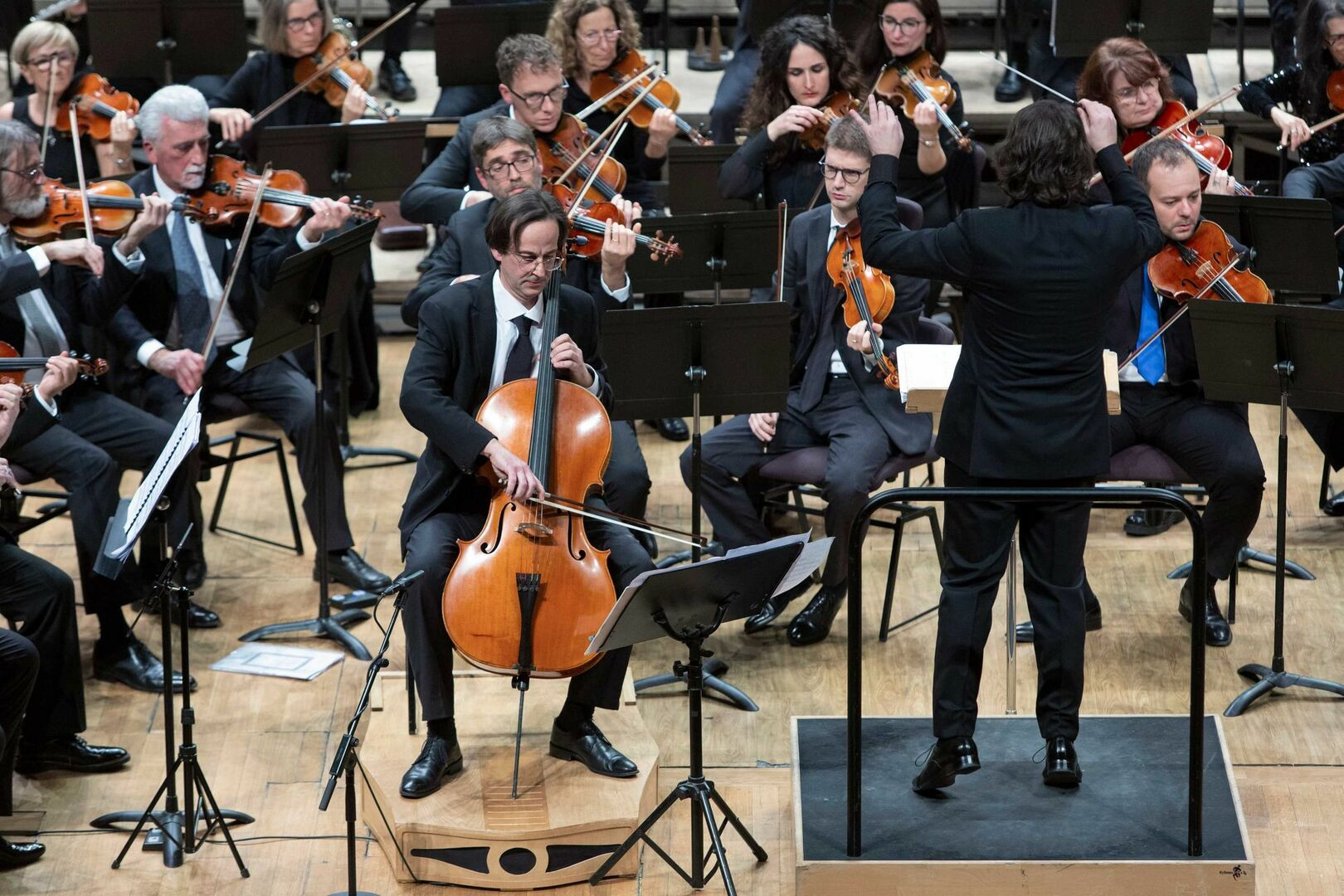
Mario Shirai Grigolato, cello soloist with the Amatoriale – photo by Angelica Concari
Twenty years later, this spirit is more alive than ever and finds new expression in the concert on March 28, which will feature Brahms’s Double Concerto. It is a symbolic piece, as Mario Shirai Grigolato explains: "It’s like climbing a mountain: the first movement is the ascent—long and demanding, requiring you to build your progress step by step; the second is the summit, where you finally catch your breath and enjoy the view; the third is the descent—freer—leading to the finish." It is a powerful image that perfectly encapsulates the journey of the Amateur Orchestra: a collective climb fueled by dedication, passion, and a shared experience.
And just like any conquered peak, these twenty years do not represent a finish line, but a new beginning—fueled by the same energy, the same enthusiasm, and the same inexhaustible love for music.



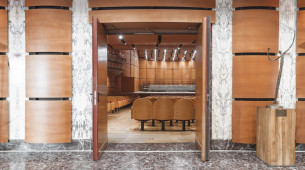
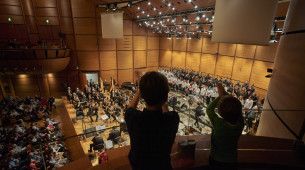
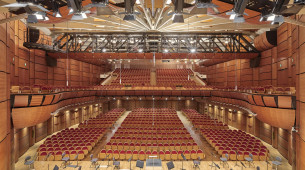
 Auditorium of Milan






















.jpg)
.jpg)

.jpg)
.jpg)